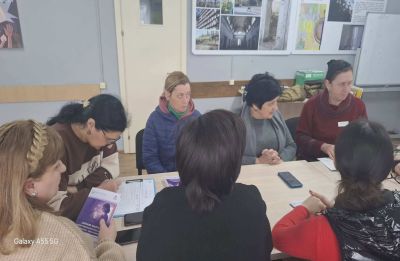
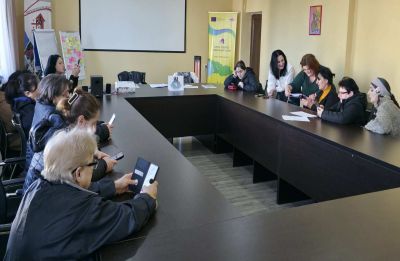
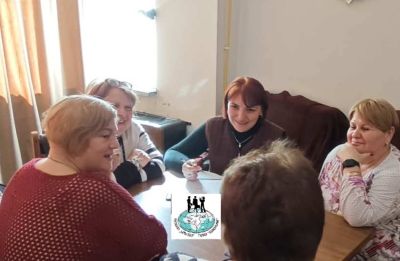
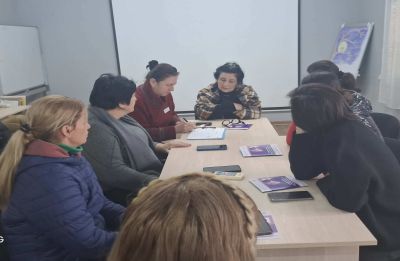
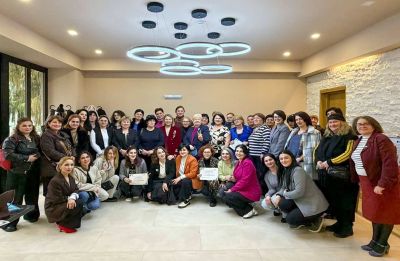
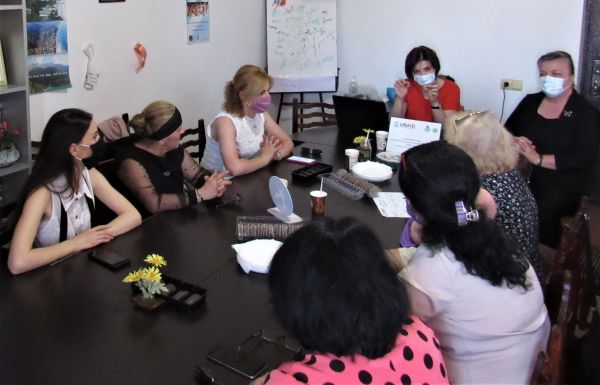
- Everything that concerns public welfare, is our business - noted the members of the youth initiative group of the village Koki at the end of the meeting. The meeting was about leadership and civic activism. Young people have learned a lot, and the most important thing is that activism is: activity, action, involvement, responsibility, participation, voluntariness.
In addition, two more meetings were held with women's initiative groups from Zugdidi and Koki/Khurcha in Zugdidi municipality. During the meeting, they talked about the level of human security of the population and the researches, conducted for gender needs assessment.
The participants selected certain proposals - for example, opening of service centers in the villages (salon, sewing workshop, shoe repair), solution of social and infrastructural problems. Members of initiative groups will start to advocate the problems.

A consultation platform has been set up with the Office of the State Minister on "Women, Peace, and Security - Enhancing Women's Effective Participation in the Peacebuilding Process". The contribution of the Fund "Sukhumi" is important together with the partner organizations in this success.
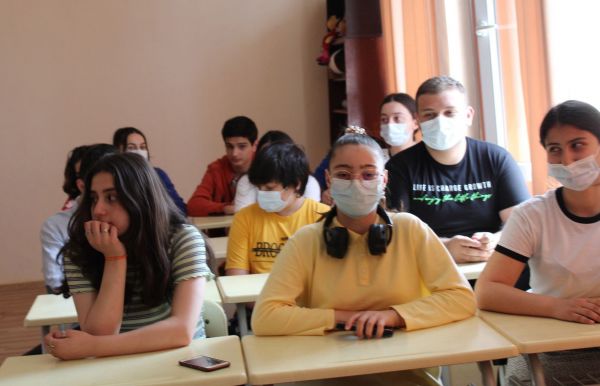
There are two youth initiative groups in Tskaltubo. The group members determined the indicator of their own activity at the meetings and paid attention to the factors contributing to the development of activism. They recalled specific cases related to civic activism. According to them, the youth inclusion will contribute to the promotion of youth policy in society.
During the meeting with members of the women initiative group, the participants listened to information about the questionnaire, which aimed to assess the quality of human security and gender needs. The problems identified during the research will become the subject of advocacy, which will be determined by the advocacy plan of the initiative group from the next month.
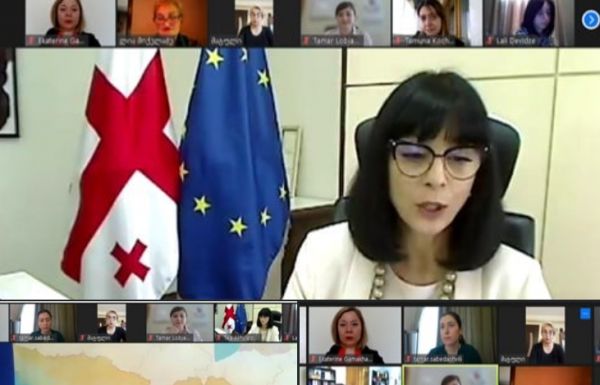
On May 24, 2021, Ekaterine Gamakharia, the head of the representative office of Fund “Sukhumi” participated in a regular information meeting between the participants of the Incident Prevention and Response Mechanism (IPRM) in the direction of Ergneti and representatives of civil society. Representative Offices of the State Minister for Reconciliation and Civic Equality of Georgia and the State Security Service, the European Union Monitoring Mission, the UN Women, local CSOs and women's organizations, IDPs, and women affected by the conflict have participated in the info-sharing meeting.
At the meeting Ekaterine Gamakharia emphasized the importance of the inclusion of women's organizations with gender expertise in the group of experts, and other professionals in a specific field such as economics, ecology, violence against women, gender equality, healthcare, etc.
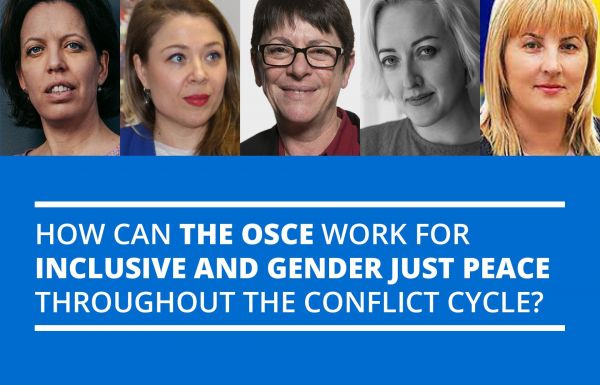
The head of Tbilisi representative office of the Fund “Sukhumi” - Ekaterine Gamakharia has participated in another session of high-level seminar of the OSCE Conflict Cycle.
The key question of the meeting was how can the OSCE work for inclusive and gender-just peace throughout the conflict cycle.
Welcome, and introductory remarked by Petra Tötterman Andorff, Secretary-General of the Kvinna till Kvinna Foundation, Sweden.
During the panel discussion speeches were delivered by Ms. Liliana Palihovici, The OSCE Chairperson-in-Office’s Special Representative on Gender, Nina Potarskaya, National Coordinator Ukraine, Women's International League for Peace and Freedom, Igo Rogova, Executive Director Kosovo Women’s Network, and Ekaterine Gamakharia, Cultural-Humanitarian Fund "Sukhumi".
“Tolerance and conflict” - this topic was discussed in the village Lia (Tsalenjikha municipality) with the youth initiative group.
At the end of the meeting, the general mood of the participants was as follows: you should treat people the way you want them to treat you - these are the words of great importance. We must respect each other. We can create a tolerant society ...
The second meeting was held with the women initiative group of the village Pakhulani (Tsalenjikha municipality). An assessment of the technical side of the women’s needs research was made. The group members, who participated in the research talked about the process of implementation, about the obstacles and what contributed to the work.
The meeting participants also touched upon the plans. It was noted that the work of the groups is quite effective.
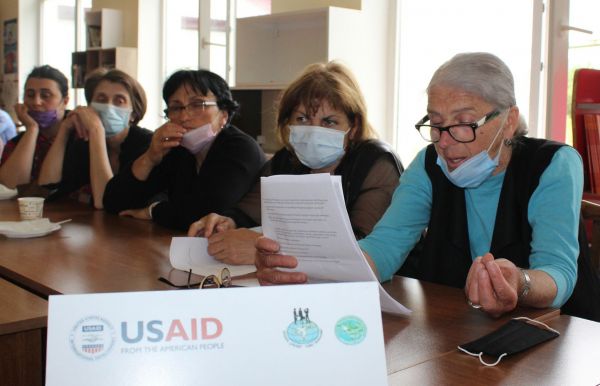
During the meeting of of Zugdidi Women Initiative Group, the technical side of the women's needs research was assessed. Participants talked about how they planned the process of conducting the research, what happened, what problems they faced and what were the obstacles and the contributing factors during the work.
Each speaker spoke with specific examples: about the difficulties of work, about conducting an interview, a dialogue with a respondent. The group members received advice on the basic principles of facilitation and discussed future plans.
The meetings were held in the Women Initiative Groups of Koki / Khurcha and Zugdidi. An online training was held for the third group of Zugdidi municipality - the youth initiative group of Koki - on the topic “Prehistory of Georgian-Abkhazian conflict, its subsequent development and consequences”.
The project is implemented with the support of the USAID
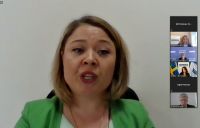
The head of Tbilisi representative office of the Fund “Sukhumi” - Ekaterine Gamakharia has been involved in the High-level Opening Session of the OSCE Conflict Cycle Seminar (Conference), where she, along with the Foreign Minister of Sweden, Anne Linde; Secretary General OSCE, Helga Schmid; Undersecretary of State for Security, the America, Asia and Eastern Policy, Marcin Przydacz and Assistant Secretary-General for Europe, Central Asia, and America, Miroslav Jenča gave a speech on the “Main challenges and opportunities for inclusive processes and partnered engagement with women’s civil society in the field”.
Ekaterine Gamakharia briefly talked about women’s organization’s role and contribution in peacebuilding in Georgia. She highlighted some favorable factors for women’s participation in the Peace Process. At the same time, she stressed existing challenges and barriers for “meaningful participation” of the women, that requires proper attention and response.
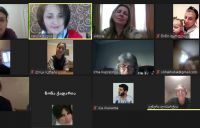
What difficulties accompanied the survey process, what experience was gained and how satisfactory are the results - the participants of the meeting of Senaki Women's Initiative Group shared the opinions with each other during the feedback.
- I didn't have any experience, I got involved in the survey process for the first time and gained valuable practice, I differently saw the problems that worried women.
- It is not easy to conduct focus groups, manage a group, facilitate. But I was able to do it. All participants were actively involved in the process.
After the exchange of opinions, the participants received relevant recommendations, which will further strengthen their technical skills.