
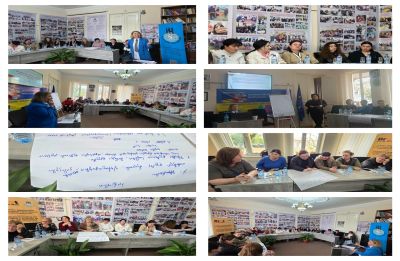
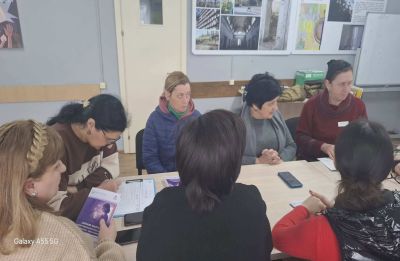
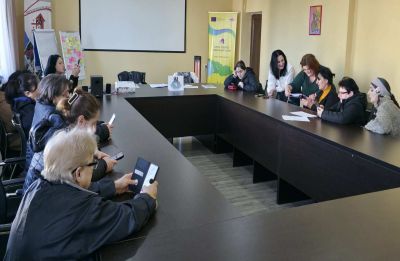
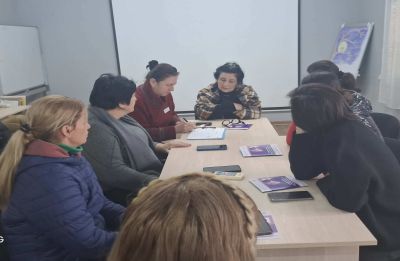
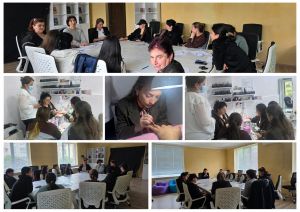
A new initiative of Women Fund “Sukhumi” has started in Khoni — a gel polish training course that creates an opportunity for women to develop practical skills and strengthen their economic prospects.
On May 1, representatives of the Fund met with the women’s group to learn more about their interests and needs. Today, the participants have already started the learning process.
Within the course, women are mastering gel polish techniques, gaining new professional knowledge, and taking an important step toward self-employment and financial independence.
For the participants, this initiative is not only an opportunity to learn a new profession, but also a space where knowledge, motivation, and support strengthen one another.
The project is implemented with the support of CISU
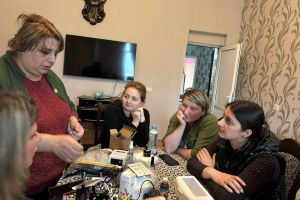
A one-month basic manicure training course has started in Senaki, aimed at supporting women’s economic empowerment. Ten women are participating in the program.
The course is led by Nestani Dadiani, a specialist with 20 years of experience in this field. The participants have already received the necessary materials and equipment. The first two lessons have also been conducted.
The program gives participants an opportunity to acquire new practical skills and consider employment or self-employment opportunities. At the same time, the course serves as a space where, alongside learning, women strengthen their confidence in their own abilities and their motivation toward economic independence.
Such initiatives play an important role in creating new perspectives for women and helping them plan a more stable future.
The project is implemented with the support of CISU

A workshop on the topic “Identifying, Supporting, and Responding to Domestic Violence Against Women in Local Communities” was held in Geguti village, Tskaltubo Municipality. The meeting brought together 10 women.
During the workshop, participants received information about different forms of domestic violence, ways to identify them, and available support services. Special attention was given to less visible forms of violence that are often difficult to recognize.
The meeting was conducted in an interactive format. Participants shared their views and experiences. According to them, such meetings strengthen mutual support and increase readiness to seek and provide help when needed.
The project is implemented with the support of CISU
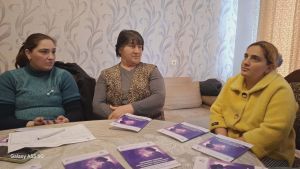
A workshop was held in Senaki on the topic: “Identifying, Supporting, and Responding to Domestic Violence Against Women in Local Communities.”
The meeting was attended by 10 women of different professions and social backgrounds, including kindergarten and school teachers, socially vulnerable women, and women with experience of violence. During the workshop, participants received information about various forms of violence, with particular attention paid to violence committed through the use of online technologies.
The discussion highlighted that modern technologies have further complicated the forms of violence against women and weakened women’s sense of safety. Participants also discussed how violence can be identified, how to establish proper communication with women at risk, and why more active community involvement is important in responding to cases of violence.
Participants noted that it is often very difficult for a woman to cope with domestic violence alone, and that both wider dissemination of information and coordinated work among representatives of different professions are necessary. In their view, community support and timely response are among the key preconditions for preventing violence.
The project is implemented with the support of CISU
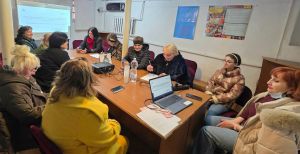
A workshop was held at the Women’s Fund “Sukhumi” office in Kutaisi on the topic: “Identifying, Supporting, and Responding to Domestic Violence Against Women in Local Communities.” The meeting was attended by 10 women.
The aim of the workshop was to provide participants with information that would help them recognize different forms of violence, understand ways of support, and access relevant services. Special attention was paid to the mechanisms that help women protect themselves as well as support other women.
The meeting became a space for open discussion, sharing experiences, and listening to one another. The discussion once again showed that violence is not manifested only in physical form and often reveals itself through invisible signs as well. Participants particularly emphasized that such meetings give them knowledge, confidence, and help them see more clearly what to pay attention to when identifying violence.
The project is implemented with the support of CISU

A workshop was held in Zugdidi municipality with a group of women on the topic “Identification, Support, and Response to Violence Against Women in Local Communities.”
The meeting was conducted in an interactive format, allowing participants to explore in depth different forms of violence, warning signs, and response mechanisms. Particular attention was paid to technology-facilitated violence, new challenges related to women’s safety in the digital environment.
During the discussion, it was noted that leaving a violent relationship is often a difficult decision; however, women’s support and empowerment in such situations are critically important. It was also emphasized that children should not grow up in a violent environment.
Participants also discussed the challenges of identifying violence. According to them, violence eventually becomes visible, but often at a stage when help is already delayed. Therefore, prevention, awareness, and timely response are essential.
According to participants, such meetings strengthen the sense of support and hope, and contribute to women’s empowerment and the prevention of violence in local communities.
The project is implemented with the support of CISU
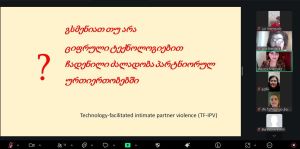
An online meeting was held via Zoom with the participation of 12 women from the municipalities of Tskaltubo and Kutaisi. The session was facilitated by representatives of the Women’s Fund “Sukhumi” — Lela Shengelia and Anzhela Chikhladze.
The main topic of the discussion was technology-facilitated violence and women’s safety in the digital space. Participants shared their experiences and challenges in online environments and received practical information on modern forms of violence, proper evidence collection, and available legal mechanisms.
Participants evaluated the meeting as useful and practical, especially due to the knowledge they gained on how to protect themselves and seek support.
The meeting once again highlighted the importance of informed and empowered women in creating a safe digital environment and preventing violence.
The project is implemented with the support of WAVE Network
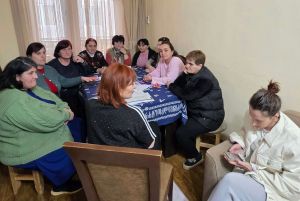
In Kutaisi, a workshop was held with a women’s target group on the topic: “Identifying, supporting, and responding to domestic violence against women in local communities.” The meeting was attended by 10 women and was facilitated by a community group leader.
During the workshop, participants discussed in detail the different forms of violence, the signs that may indicate a victim, and the ways to strengthen community-based support and response mechanisms. Special emphasis was placed on the importance of not normalizing silence around violence and on the responsibility of society not to remain indifferent to violence in another family.
Participants evaluated the meeting as a valuable, necessary, and practical source of knowledge. According to them, the information received will help them better identify signs of violence, respond appropriately, and seek support when needed.
The meeting once again highlighted that informed women and empowered communities are key foundations for preventing violence.
The project is implemented with the support of CISU
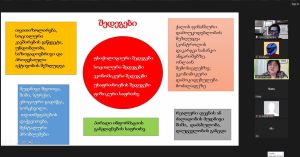
The Women’s Fund “Sukhumi” held an online workshop via Zoom with youth groups from Chokhatauri and Vani municipalities.
The session focused on technology-facilitated violence and digital safety. Participants received practical guidance on protecting personal data, securing accounts, cyber hygiene, and recognising and responding to online abuse.
The workshop was facilitated by Women’s Fund “Sukhumi” representatives Nino Chabukiani and Lali Shengelia. The discussion highlighted the importance of digital safety knowledge and open dialogue as key factors in preventing violence among young people.
The project is implemented with the support of the WAVE Network
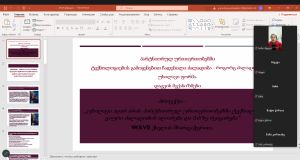
On February 12, 2026, an online meeting was held via the Zoom platform with women’s groups from the municipalities of Khoni and Senaki, organized by the Women’s Fund Sukhumi.
The main topic of the meeting was technology-facilitated abuse and the forms of control and pressure exercised in digital spaces within intimate relationships. Participants discussed the challenges present in online environments and the harm that often remains unnoticed.
Special attention was given to practical issues, including the protection of personal data, account security, preservation of evidence, and ways to seek assistance when needed.
During the meeting, participants emphasized the importance of recognising the problem and speaking openly about it, which is an essential prerequisite for preventing violence and creating a safe environment.
The project is implemented with the support of the WAVE Network