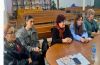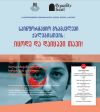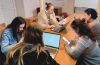
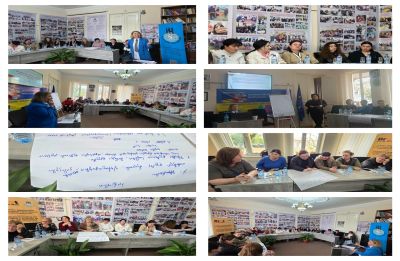
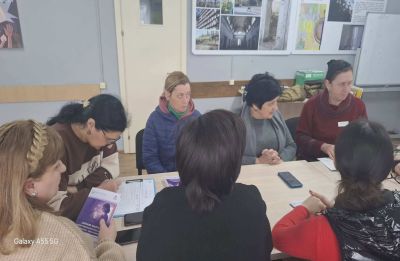
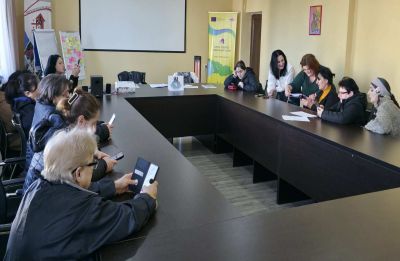
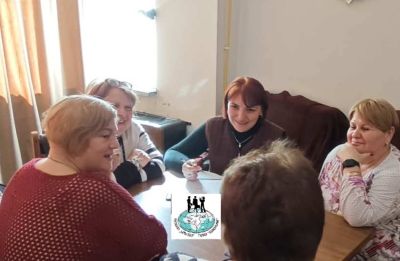
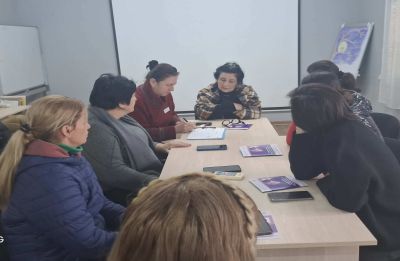
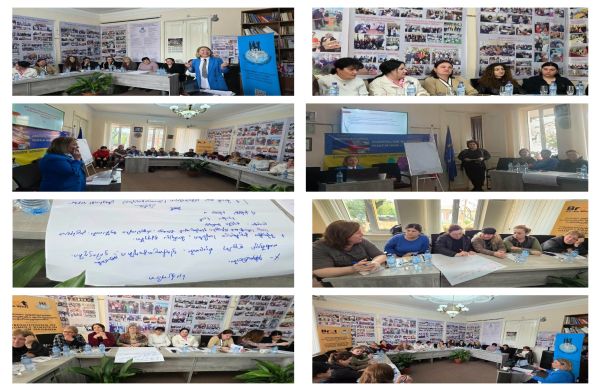
In Kutaisi, Ekaterine Gamakharia, Head of the Tbilisi Representative Office of the Charity Humanitarian Women Fund “Sukhumi”, conducted a training on the topic: “Trauma-Informed Approach and Understanding the Dynamics of Violence in Working with Women Survivors of Violence.”
The training brought together para-specialists and community leaders who work with women survivors of violence in their daily practice. The aim of the meeting was to strengthen participants’ capacity to apply a trauma-informed approach and to deepen their understanding of the dynamics of violence.
During the training, participants discussed the social roots of violence, the influence of gender norms and stereotypes, violence as a system of control, the cycle and spiral of violence, as well as the impact of trauma on women’s behavior and decision-making.
Special attention was given to practical cases, group work, and the principles of trauma-informed communication. Participants reflected on how women’s reactions and behavior can be understood within the context of trauma, and how to create a safe, non-judgmental space in the support process.
The meeting once again highlighted that working with women survivors of violence begins with understanding, sensitive communication, and recognizing the experiences that affect women’s decisions and emotional state.
The project is implemented with the support of CISU
Based on the brochure prepared by Women Fund “Sukhumi” - “Women’s Experiences of Different Forms of Violence” - a video has been created that brings together the stories of three women.
The video presents the experiences of Ana, Lia and Tea, clearly illustrating that violence against women manifests in different forms - including psychological pressure, physical aggression, and situations where a woman seeks help but the system fails to provide effective protection.
The video aims to support the recognition of different forms of violence, raise awareness on the issue, and highlight the importance of support for women.
The project is implemented with the support of the organization Brot
für die Welt - Evangelischer Entwicklungsdienst (Germany)
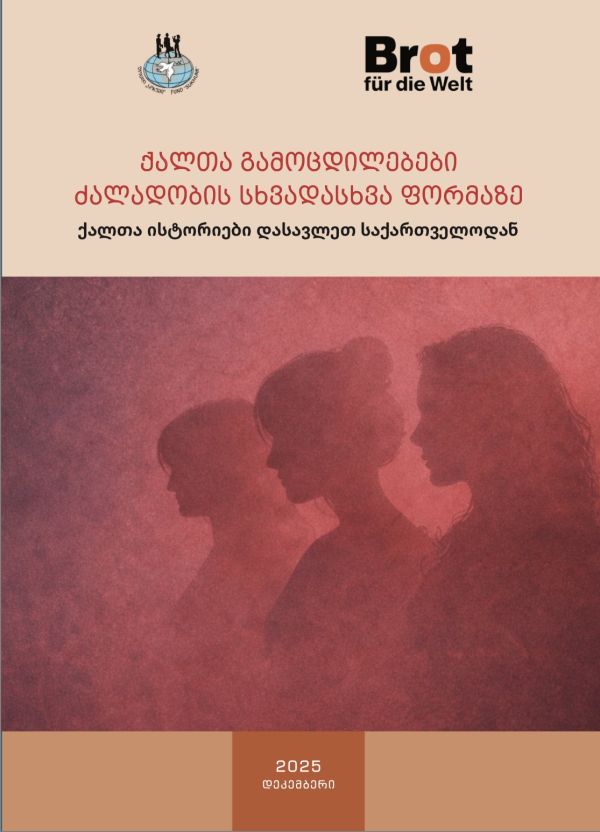
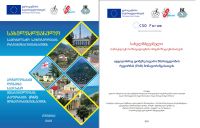
The new brochure prepared by Women Fund “Sukhumi” - “Women’s Experiences of Different Forms of Violence” - brings together stories of women living in different municipalities of Western Georgia.
The publication shows how violence against women manifests itself in different forms - including psychological, physical, economic and digital violence, as well as institutional barriers - and why these experiences so often remain invisible and unspoken.
The brochure is based on the research conducted by Women Fund “Sukhumi” and on data collected by its monitoring group. The stories included in the publication have been adapted and the names changed for women’s safety. Its aim is to help identify violence, break the silence, and raise awareness of available support services.
The project is implemented with the support of the organization Brot
für die Welt - Evangelischer Entwicklungsdienst (Germany)
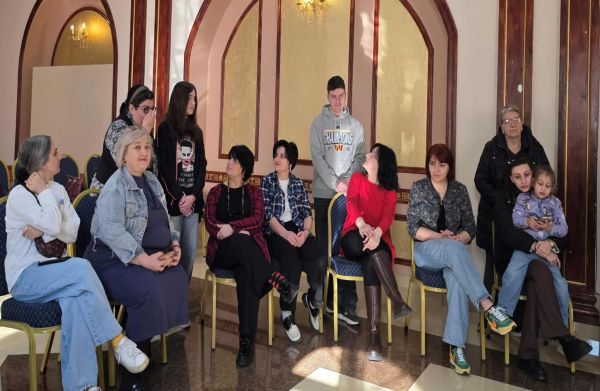
Retreat is a working meeting, a psychological and physical recharge, a vacation that will be pleasantly remembered by everyone.
The Fund “Sukhumi” staff spent three days with their families at “Borjomi Palace” Hotel (mostly there were children: kind, beautiful, and talented).
There were excursions to the Rabati Fortress, the Cathedral of St. Seraphim of Sarov, the Cathedral of St. George in the village of Sadgeri, and walks through Borjomi Park and the streets.
While working with psychologist Inna Ayrapetyan, the participants sought answers to the following questions: What is our current state? What factors negatively impact us? What can we influence? What can we change? Where can we find new strength and resources?
Of course, we "discovered" many internal resources, created and deciphered their "internal" and "external" masks, mastered new "self-defense" techniques, better understood each other, thought, cried, and laughed...
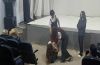
At the end, the children surprised us: they showed a scene from the forum-theater, danced, and recited poetry...
We realized: the resources are within us, in our families, and also in the beneficiaries, in those whom this organization helps, whom it tries to support for almost 30 years...
The project is implemented with the support of the organization Brot
für die Welt - Evangelischer Entwicklungsdienst (Germany)
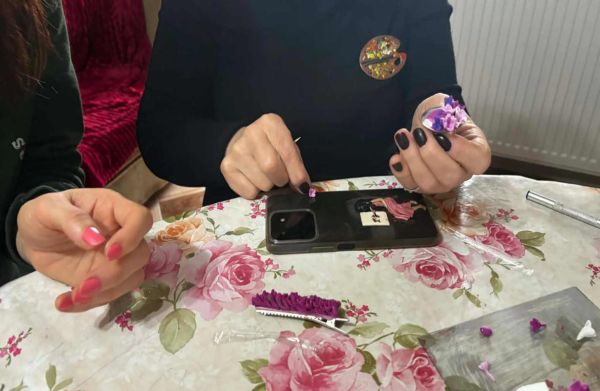
Women with difficult experiences come to the rehabilitation center: unresolved trauma, long-term stress, hopelessness, low self-esteem, and difficult social situations. However, behind these difficulties lies the ability to fight and faith in a better future.
In order to strengthen their faith, we offered the women a polymer clay master-class led by the trainer - Maka Jishkariani. The creative process was more than just a craft—it was a therapeutic experience, allowing them to discover their own abilities and activate their inner resources.
The workshop participants showed great interest. Each of them demonstrated natural talent and a great desire to better learn this direction.
The works created by them were filled with color, emotions and the hope of something new. This day became another step towards the changes.
The project is implemented with the support of the organization Brot
für die Welt - Evangelischer Entwicklungsdienst (Germany)
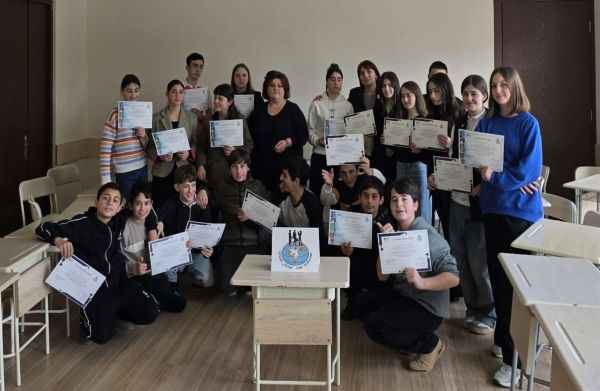
The final meetings of the six-month training course held in 10 municipalities have finished. At the final meetings, youth club members reviewed the old material, made interesting presentations, demonstrated their leadership and trainer skills, summarized their experiences, and discussed the impact of the training process and the changes they experienced.
At the end of the meetings, most club members were awarded certificates for active participation, and the most outstanding participants were awarded the status of trainer.
The project is implemented with the support of the organization Brot
für die Welt - Evangelischer Entwicklungsdienst (Germany)
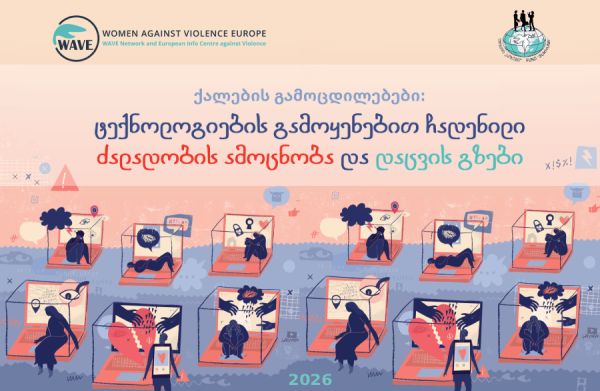
Women’s Experiences: Recognizing Technology-Facilitated Violence and Ways to Protect Yourself is a brochure that brings together stories based on women’s experiences, showing how, in intimate partner relationships, technologies can become tools of control, surveillance, blackmail, financial pressure, and intrusion into personal space.
The brochure helps readers recognize the early signs of technology-facilitated violence, explains why responsibility never lies with the woman who has experienced violence, and offers practical advice on digital safety, preserving evidence, and seeking support. The publication was prepared by the Women Fund “Sukhumi” within the framework of the project “No Longer Invisible: Recognizing and Responding to Technology-Facilitated Violence in Intimate Partner Relationships”, with the support of the WAVE Network.
The project is implemented with the support of the WAVE Network
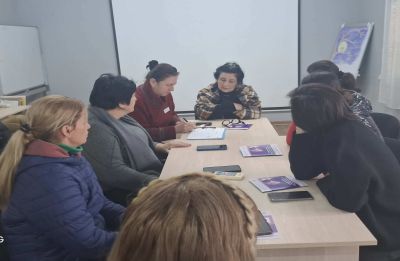
Part of the women's mutual assistance group meetings were held online. Members of Tsalenjikha group spoke online about the importance of their work and noted the support provided by the Fund “Sukhumi” to women. One part of the meeting was devoted to training – trainer Kristine Kutateladze presented a presentation on artificial intellect and answered questions.
In Senaki, attention focused on women's solidarity, the problem of violence, and, in particular, digital violence. Participants were provided with our publication, "Violence in Partner Relationships Using Technology – Recognize and Protect Yourself."
The ordinary meeting of Kobuleti group and other groups was also interesting. Participants discussed women's rights, municipal services, changes, and innovations. A psychologist was also involved, conducting group and individual consultations.
The women enjoy the meetings, where they discuss problems and solutions. The group work provided each of them with new knowledge and experience. They hope that by working together they can achieve more.
The project is implemented with the support the Equality Fund (Canada)
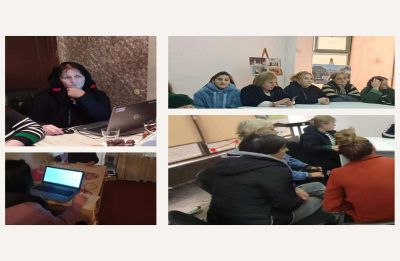
The mutual assistance group in Tskaltubo actively works within the framework of the project. Therefore, the group members easily summarized their activities. An online questionnaire was developed for evaluation, which the group members answered individually.
The meeting was also held online. The women's answers clearly demonstrated their achievements during their work, as well as the changes that had occurred in their lives and in the IDP community.
The group members noted that the initiatives were implemented in accordance with the needs of the communities, and the work, held during a year, was productive.
For example, these photos clearly demonstrate the difference - how the playground in the IDP settlement of Kopitnari was damaged. After restoration, children and young people will have a playground that meets modern standards.
The project is implemented by a coalition of non-governmental organizations: the Association of IDP Women "Consent," the Women's Information Center, and Charity Humanitarian Women Fund “Sukhumi”.